I decided to interview my coworker who is an ENL teacher and has been in the district for 17 years. He has been in the elementary schools with the little kids to the older kids at the high school. He has been through multiple different superintendents, assistant superintendents, principals, and assistant principals. He has been my co-teacher for our ENL class for the last two years. He also became the department head of ENL this past school year as we had never had a department before big enough to warrant one. He has always been my unofficial mentor in the building and has been a great help at offering advice and as a sounding board for ideas for the class or frustrations.
I found while we were discussing my list of questions about his experience in the district that we had already touched upon a lot of these issues and questions in our normal discourse about the school. We meet up at Friday’s, our local spot, five minutes down the road from the school, where during the school year we meet for lunch, about once a week, to decompress and chat about our weeks. This conversation, I hesitate to call it an interview because of the easy-going nature of our conversation is natural and follows similar grooves of previous discussions.
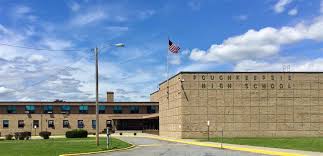
When asked about what our students need in our district, the answer is the same as I have heard and seen before, our students need academic remediation and help to learn the skills they will need when they graduate high school. Our kids come to us with very low skills because of the background they come from. Many of our students have parents who work one or more jobs, some have parents who themselves have never moved past high school or even graduated from high school, and with an ever-increasing population of English Language Learners, we are seeing students who are not even proficient in their native language and are lacking the support from the school to bring them up to speed. We discussed how our district has not had a reading program in years and that English classes are treated as the place for students to grow their reading levels at exponential levels that are not reasonable or fair to the students. Our students have not had the remediation necessary to succeed and this lack of support is shown in all of their test scores from 3rd grade up until the 8th grade exam. This conversation about the need for remediation at the lower levels is brought up frequently in our department meetings because we, as the English department, are constantly struggling to help the students gain the skills necessary to access and analyze complex texts. And then on top of that struggle, we have seen an influx of English Language learners in the past few years but the resources have not caught up to the number of students needing services. Last school year, we had three ELL teachers, two having a mix of standalone ELL classes and push ins and one teacher focusing solely on pushing in. Even still, there were students who were not receiving the services that would be necessary for them to survive. ELL students are frequently put into content classes with no ELL teachers when they have very little understanding or control of the English language. So those students are overwhelmed by the language barrier and the content of the class.
When asked about how the district supports the community, my coworker mentioned The Mill Street Loft program and our partnership with Marist. The Mill Street Loft is a nonprofit that gives students a space and resources to create their own art. The Mill Street Loft also hires students to help with their own artistic projects and helps the students to build resumes with relevant work experience in the arts. It provides its own transportation to the students and has had a huge impact on those artistic students looking for a space to work and create. Our district also has a partnership with Marist called the Liberty Program, where students are given tutoring and mentoring each day, as well as snacks and a safe space to hang out after school if needed. Being a part of the program also offers other benefits such as access to summer programs, field trips to colleges and other educational spaces, and discounted tuition at Marist when they graduate. The program is immensely helpful for those who are motivated to go and put in the time necessary to be a part of it.


When we moved to the discussion of parents in the community and how to get them involved, he brought up a point that we have discussed before. If the school provides food, then the parents will come. The implications of that simple statement are many but I was interested in what he had to say next. He said that we should use the food as the enticement so that we can conduct meet and greets and offer adult education for them. He believes that this would empower them to become empowered in their own lives and help them better understand and advocate for their students. The community is one that has not had a lot of support and has had a lot of upheaval in the educational realm. A good way to fix that would be to reach out and connect with the community in a meaningful way.
When asked about writing in our district, he replied that a love of reading and of writing has been stifled by the lack of support in the schools. We do not have a reading program for students who are below grade level, and we have only this past year implemented AIS classes again for students, but they bear no credit and are hard to get students to attend. The English electives are treated as disguised AIS which hinders the learning of the students who took the elective because of their interest in the content and those who were put there for AIS help but do not care about the content and as a result are very disengaged in the class. As a result, many students are below reading level and never have a chance to find their voices as writers because the English department is so focused on getting them up to speed, so they can pass the regents at the end of the year so that they can graduate. I think that this conversation reinforced for me why we need to incorporate more of the kind of writing we have been doing here these past two weeks and really rethink how we teach writing and approach it.
 ECLInstitute - HVWP 2019-2020